




Change Management
Manage all changes that may directly or indirectly impact your services in a controlled, planned, and effective way— ensuring smooth and successful implementation through change management.


Manage all changes that may directly or indirectly impact your services in a controlled, planned, and effective way— ensuring smooth and successful implementation through change management.
Benefits of the Change Management Module

Well-planned, controlled, and effective change management enables organizations to maintain their services without disruption. Unexpected outages are minimized, and system stability is preserved — helping protect critical infrastructure from potential damage.

Through impact analysis and pre-approval processes conducted before each change, potential threats are identified and mitigated. This approach works in harmony with IT risk management practices to reduce the overall corporate risk profile.

As new systems, software, or service models are implemented, challenges related to digital adaptation are minimized. The change management process ensures these transitions are more planned, measurable, and sustainable.

Every change is recorded, with clear authorization and responsibilities defined. This not only ensures operational transparency but also provides a strong audit trail for external audits and internal control processes.

Change Management supports employees in adapting more easily to new systems or ways of working during organizational transformation. By creating targeted plans for areas facing resistance, it helps foster a strong culture of change.

In change management, the CMDB provides a centralized view of all IT assets and their relationships, helping identify the potential impact of any planned change. Since change records are stored in the CMDB, traceability and rollback processes become easier. As a result, the CMDB plays a critical role in enhancing the effectiveness of change management and supports service continuity and compliance.
Well-planned, controlled, and effective change management enables organizations to maintain their services without disruption. Unexpected outages are minimized, and system stability is preserved — helping protect critical infrastructure from potential damage.
Through impact analysis and pre-approval processes conducted before each change, potential threats are identified and mitigated. This approach works in harmony with IT risk management practices to reduce the overall corporate risk profile.
As new systems, software, or service models are implemented, challenges related to digital adaptation are minimized. The change management process ensures these transitions are more planned, measurable, and sustainable.
Every change is recorded, with clear authorization and responsibilities defined. This not only ensures operational transparency but also provides a strong audit trail for external audits and internal control processes.
Change Management supports employees in adapting more easily to new systems or ways of working during organizational transformation. By creating targeted plans for areas facing resistance, it helps foster a strong culture of change.
In change management, the CMDB provides a centralized view of all IT assets and their relationships, helping identify the potential impact of any planned change. Since change records are stored in the CMDB, traceability and rollback processes become easier. As a result, the CMDB plays a critical role in enhancing the effectiveness of change management and supports service continuity and compliance.

Warning: Undefined array key "background_image" in /home/spidyac/public_html/wp-content/plugins/elementor/includes/conditions.php on line 87
Warning: Trying to access array offset on value of type null in /home/spidyac/public_html/wp-content/plugins/elementor/includes/conditions.php on line 90
Warning: Undefined array key "background_image" in /home/spidyac/public_html/wp-content/plugins/elementor/includes/conditions.php on line 87
Warning: Trying to access array offset on value of type null in /home/spidyac/public_html/wp-content/plugins/elementor/includes/conditions.php on line 90
Warning: Undefined array key "background_image" in /home/spidyac/public_html/wp-content/plugins/elementor/includes/conditions.php on line 87
Warning: Trying to access array offset on value of type null in /home/spidyac/public_html/wp-content/plugins/elementor/includes/conditions.php on line 90
Warning: Undefined array key "background_image" in /home/spidyac/public_html/wp-content/plugins/elementor/includes/conditions.php on line 87
Warning: Trying to access array offset on value of type null in /home/spidyac/public_html/wp-content/plugins/elementor/includes/conditions.php on line 90

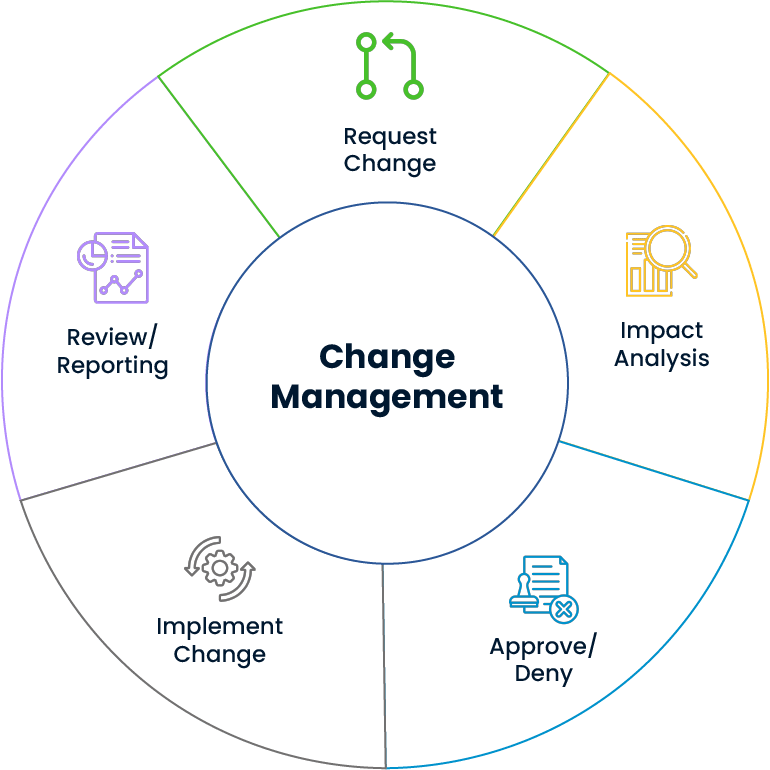
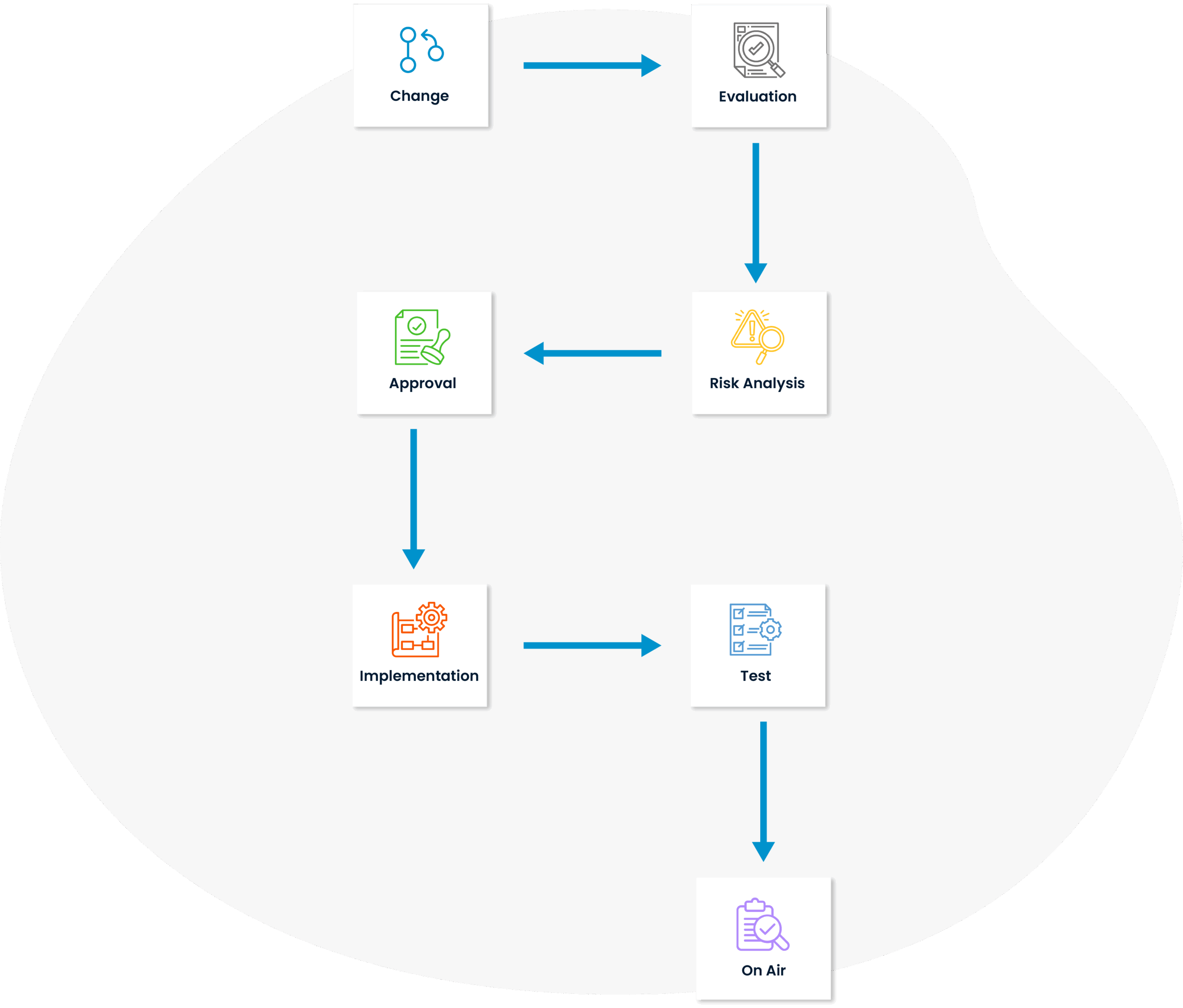
With clearly defined steps within the change management framework—such as request, assessment, risk analysis, approval, testing, implementation, and review—changes are executed systematically rather than randomly.
Organizations can effectively plan and implement changes that may directly or indirectly impact services. This process discipline reduces organizational complexity and strengthens decision-making mechanisms.

Warning: Undefined array key "background_image" in /home/spidyac/public_html/wp-content/plugins/elementor/includes/conditions.php on line 87
Warning: Trying to access array offset on value of type null in /home/spidyac/public_html/wp-content/plugins/elementor/includes/conditions.php on line 90
Warning: Undefined array key "background_image" in /home/spidyac/public_html/wp-content/plugins/elementor/includes/conditions.php on line 87
Warning: Trying to access array offset on value of type null in /home/spidyac/public_html/wp-content/plugins/elementor/includes/conditions.php on line 90
Warning: Undefined array key "background_image" in /home/spidyac/public_html/wp-content/plugins/elementor/includes/conditions.php on line 87
Warning: Trying to access array offset on value of type null in /home/spidyac/public_html/wp-content/plugins/elementor/includes/conditions.php on line 90
Warning: Undefined array key "background_image" in /home/spidyac/public_html/wp-content/plugins/elementor/includes/conditions.php on line 87
Warning: Trying to access array offset on value of type null in /home/spidyac/public_html/wp-content/plugins/elementor/includes/conditions.php on line 90
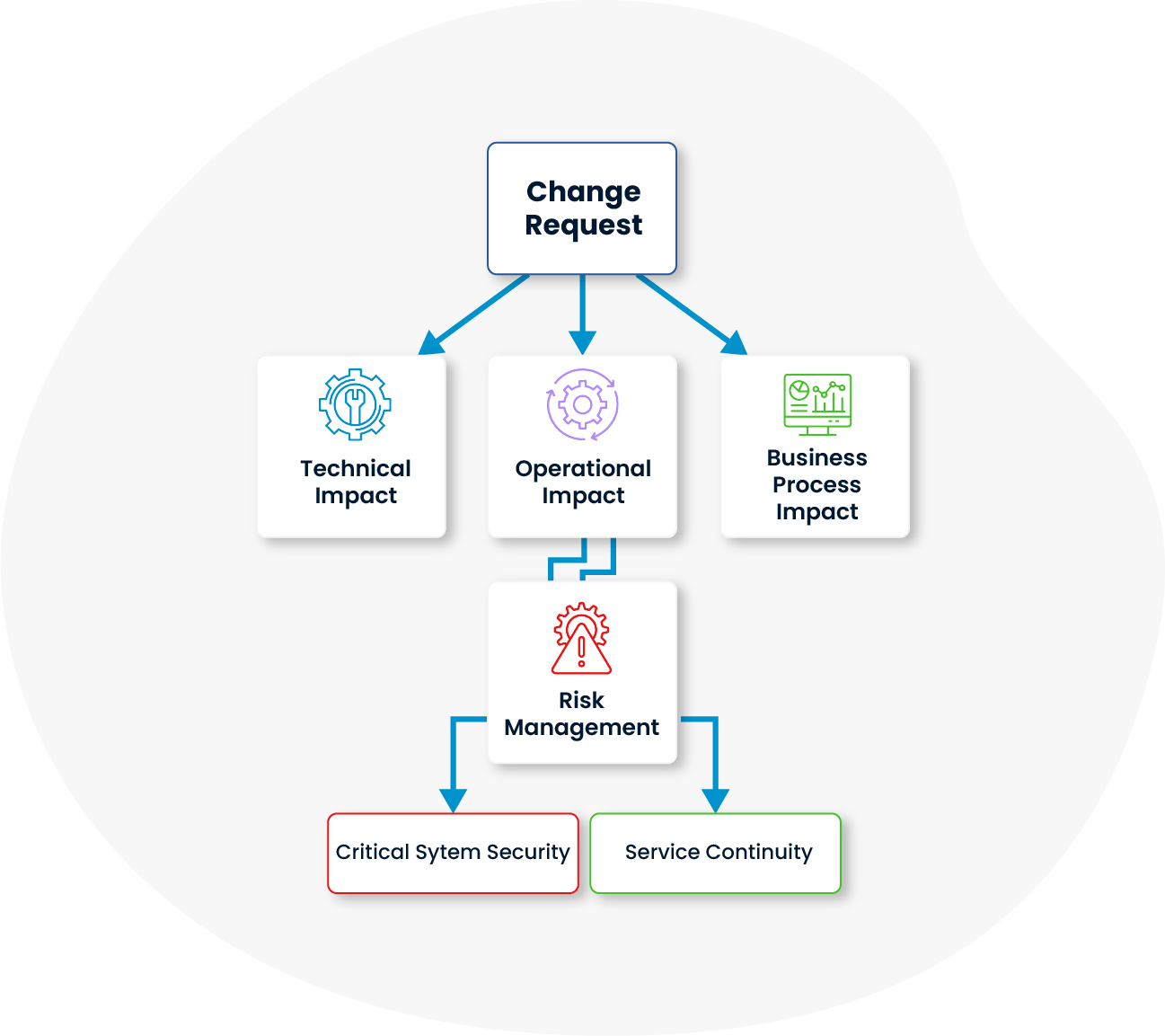
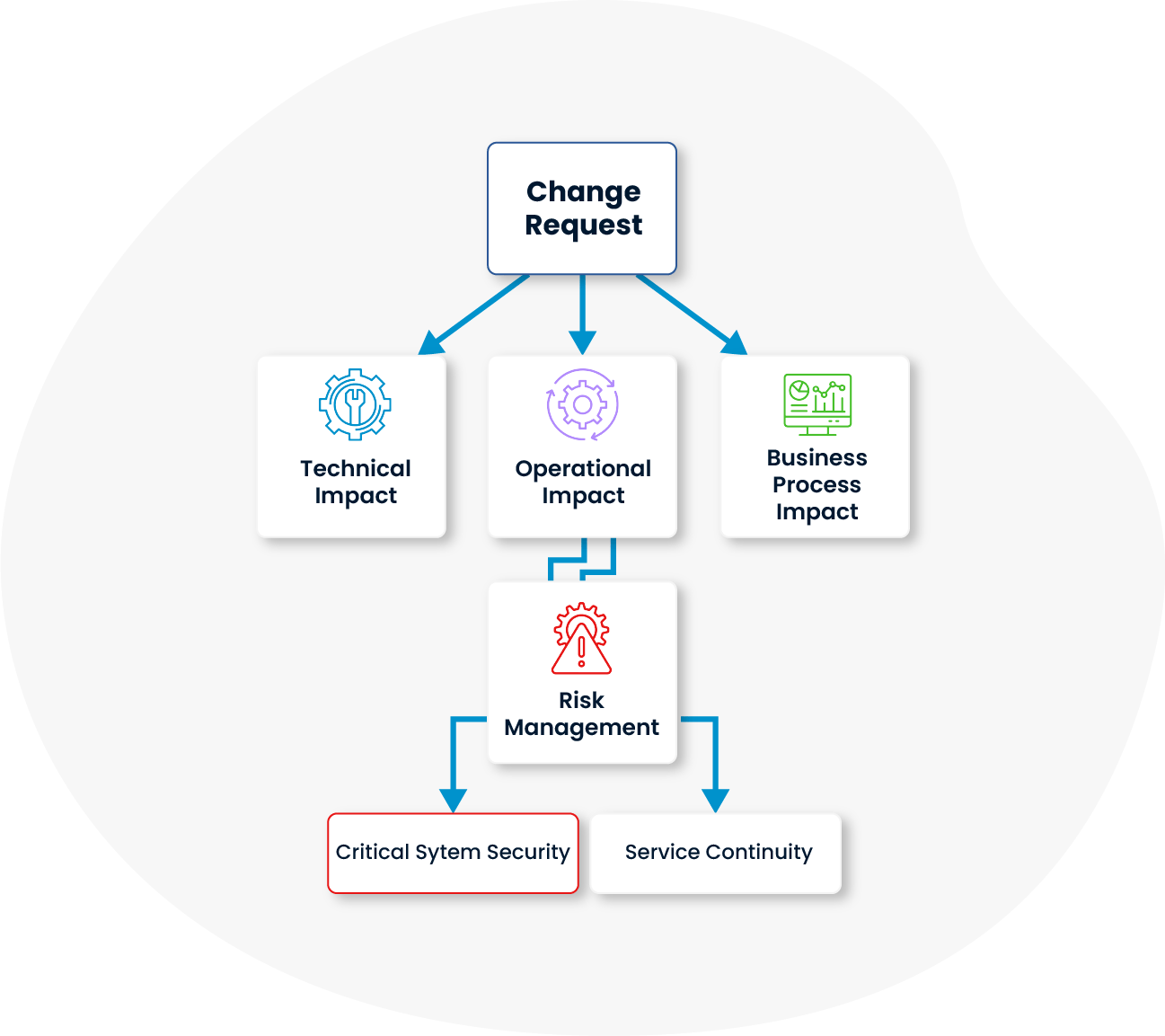
Before any change, potential impacts are analyzed across technical, operational, and business process dimensions. These assessments work in integration with IT risk management processes to identify potential threats in advance.
Protective analysis on critical systems ensures the security and continuity of services.
Warning: Undefined array key "background_image" in /home/spidyac/public_html/wp-content/plugins/elementor/includes/conditions.php on line 87
Warning: Trying to access array offset on value of type null in /home/spidyac/public_html/wp-content/plugins/elementor/includes/conditions.php on line 90
Warning: Undefined array key "background_image" in /home/spidyac/public_html/wp-content/plugins/elementor/includes/conditions.php on line 87
Warning: Trying to access array offset on value of type null in /home/spidyac/public_html/wp-content/plugins/elementor/includes/conditions.php on line 90
Warning: Undefined array key "background_image" in /home/spidyac/public_html/wp-content/plugins/elementor/includes/conditions.php on line 87
Warning: Trying to access array offset on value of type null in /home/spidyac/public_html/wp-content/plugins/elementor/includes/conditions.php on line 90
Warning: Undefined array key "background_image" in /home/spidyac/public_html/wp-content/plugins/elementor/includes/conditions.php on line 87
Warning: Trying to access array offset on value of type null in /home/spidyac/public_html/wp-content/plugins/elementor/includes/conditions.php on line 90
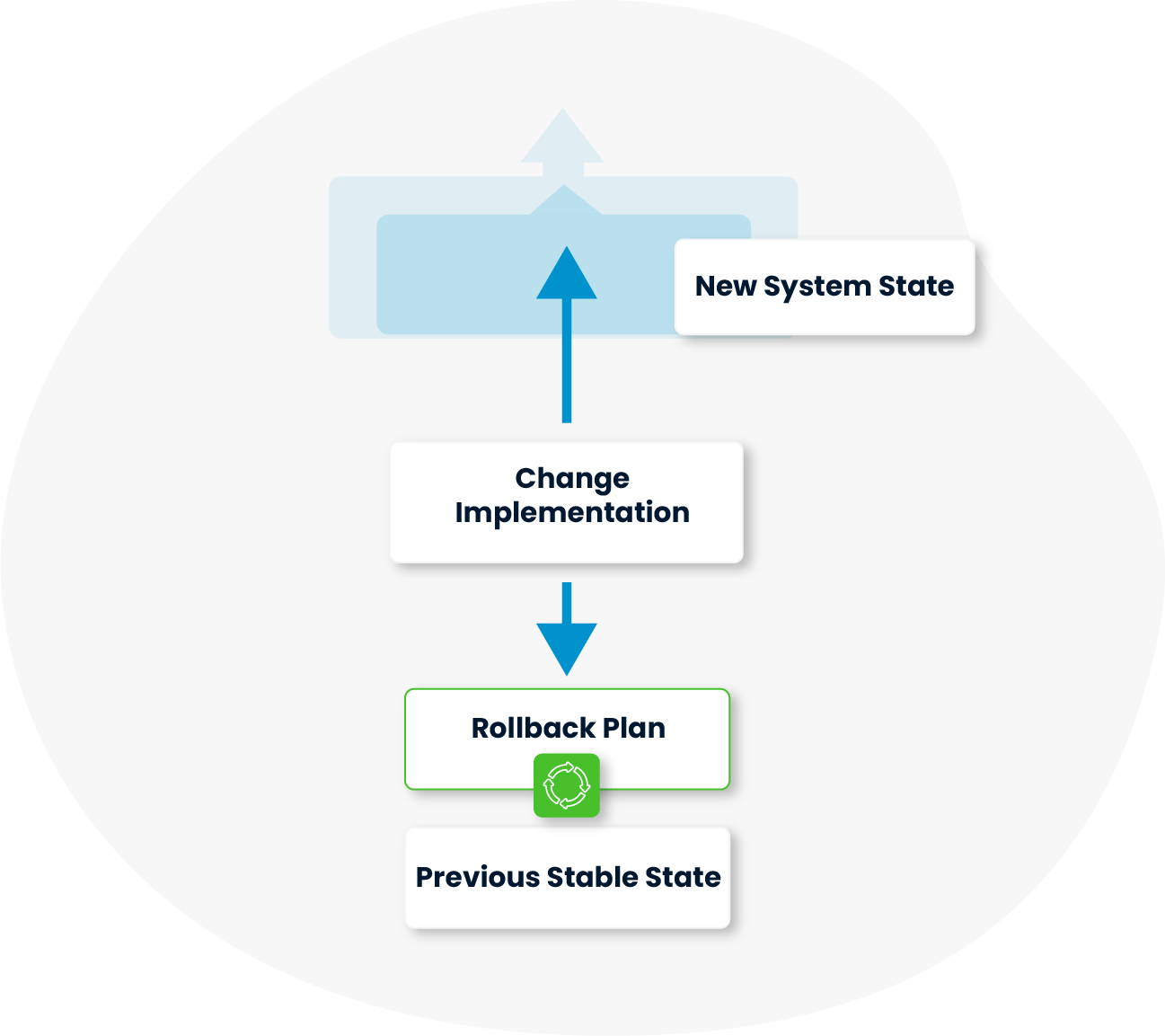
For every change, a rollback plan is prepared to address unexpected outcomes. This plan enables the system to quickly and safely return to its previous stable state. Thus, change management not only implements innovations but also includes proactive measures for potential failure scenarios.
This approach is especially critical in security services, ensuring high availability and system continuity.

Warning: Undefined array key "background_image" in /home/spidyac/public_html/wp-content/plugins/elementor/includes/conditions.php on line 87
Warning: Trying to access array offset on value of type null in /home/spidyac/public_html/wp-content/plugins/elementor/includes/conditions.php on line 90
Warning: Undefined array key "background_image" in /home/spidyac/public_html/wp-content/plugins/elementor/includes/conditions.php on line 87
Warning: Trying to access array offset on value of type null in /home/spidyac/public_html/wp-content/plugins/elementor/includes/conditions.php on line 90
Warning: Undefined array key "background_image" in /home/spidyac/public_html/wp-content/plugins/elementor/includes/conditions.php on line 87
Warning: Trying to access array offset on value of type null in /home/spidyac/public_html/wp-content/plugins/elementor/includes/conditions.php on line 90
Warning: Undefined array key "background_image" in /home/spidyac/public_html/wp-content/plugins/elementor/includes/conditions.php on line 87
Warning: Trying to access array offset on value of type null in /home/spidyac/public_html/wp-content/plugins/elementor/includes/conditions.php on line 90
Warning: Undefined array key "background_image" in /home/spidyac/public_html/wp-content/plugins/elementor/includes/conditions.php on line 87
Warning: Trying to access array offset on value of type null in /home/spidyac/public_html/wp-content/plugins/elementor/includes/conditions.php on line 90
Warning: Undefined array key "background_image" in /home/spidyac/public_html/wp-content/plugins/elementor/includes/conditions.php on line 87
Warning: Trying to access array offset on value of type null in /home/spidyac/public_html/wp-content/plugins/elementor/includes/conditions.php on line 90
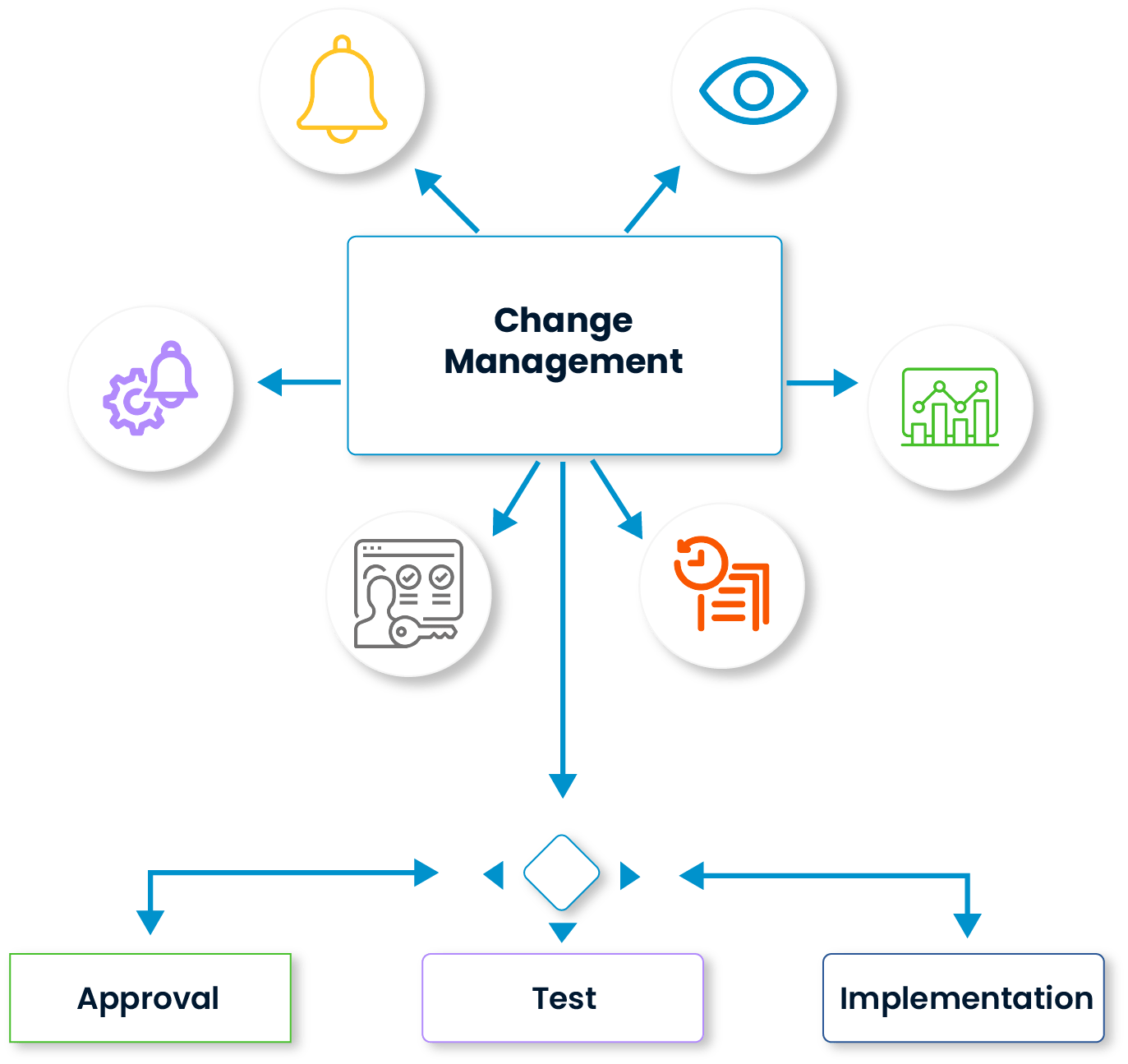
Modern change management systems minimize manual errors through automation features.
Tools such as automatic notifications, authorization workflows, audit trails, and visual reporting make the process more transparent and traceable.
These infrastructures enable centralized monitoring of every step in the change process—approval, testing, and implementation—making change management practices more agile and scalable.

Warning: Undefined array key "background_image" in /home/spidyac/public_html/wp-content/plugins/elementor/includes/conditions.php on line 87
Warning: Trying to access array offset on value of type null in /home/spidyac/public_html/wp-content/plugins/elementor/includes/conditions.php on line 90
Warning: Undefined array key "background_image" in /home/spidyac/public_html/wp-content/plugins/elementor/includes/conditions.php on line 87
Warning: Trying to access array offset on value of type null in /home/spidyac/public_html/wp-content/plugins/elementor/includes/conditions.php on line 90
Warning: Undefined array key "background_image" in /home/spidyac/public_html/wp-content/plugins/elementor/includes/conditions.php on line 87
Warning: Trying to access array offset on value of type null in /home/spidyac/public_html/wp-content/plugins/elementor/includes/conditions.php on line 90
Warning: Undefined array key "background_image" in /home/spidyac/public_html/wp-content/plugins/elementor/includes/conditions.php on line 87
Warning: Trying to access array offset on value of type null in /home/spidyac/public_html/wp-content/plugins/elementor/includes/conditions.php on line 90
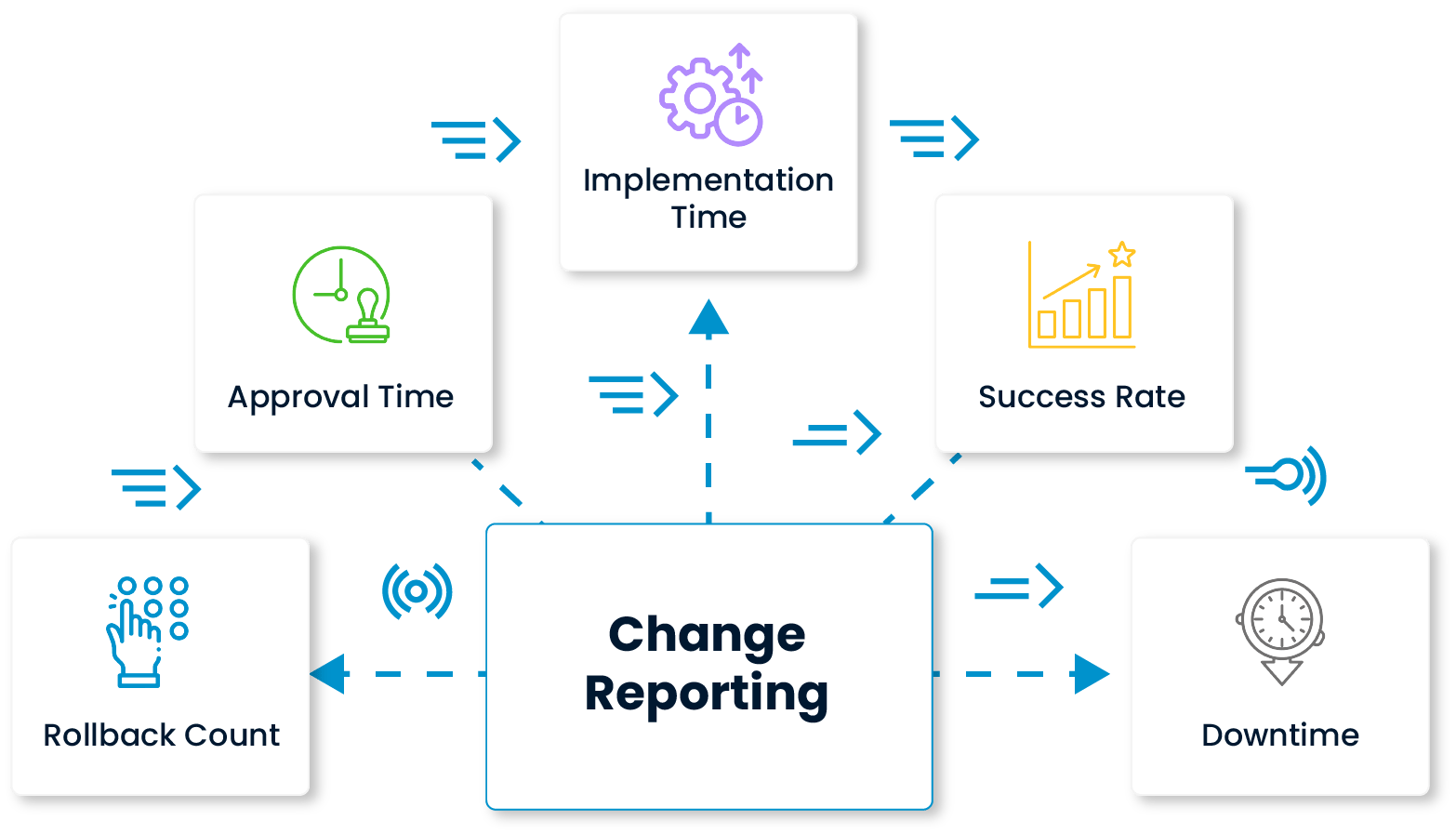
A key element of effective change management is the ability to track the success of implemented changes.
Advanced change management systems collect real-time performance data for each change, including approval time, implementation duration, success/failure rates, rollback actions, and—most importantly—service downtime. These metrics are reported in detail to provide clear insights.

Well-planned, controlled, and effective change management enables organizations to maintain their services without disruption. Unexpected outages are minimized, and system stability is preserved — helping protect critical infrastructure from potential damage.

Through impact analysis and pre-approval processes conducted before each change, potential threats are identified and mitigated. This approach works in harmony with IT risk management practices to reduce the overall corporate risk profile.

As new systems, software, or service models are implemented, challenges related to digital adaptation are minimized. The change management process ensures these transitions are more planned, measurable, and sustainable.

Every change is recorded, with clear authorization and responsibilities defined. This not only ensures operational transparency but also provides a strong audit trail for external audits and internal control processes.

Change Management supports employees in adapting more easily to new systems or ways of working during organizational transformation. By creating targeted plans for areas facing resistance, it helps foster a strong culture of change.

In change management, the CMDB provides a centralized view of all IT assets and their relationships, helping identify the potential impact of any planned change. Since change records are stored in the CMDB, traceability and rollback processes become easier. As a result, the CMDB plays a critical role in enhancing the effectiveness of change management and supports service continuity and compliance.
Features of the Change Management Module

Structured Process Flow
Integrated Risk and Impact Assessment


Rollback Mechanism
Advanced Automation and Tracking


Reporting and Performance Monitoring


Frequently Asked Questions (FAQ)
Change management is a critical process to prevent unexpected service disruptions, maintain system stability, and ensure changes are implemented in a planned manner. It also supports organizations in safely and sustainably meeting their growth, modernization, and digital adaptation needs.
Yes, the change management process should be applied not only to major system updates but to any change that may directly or indirectly impact the service. This approach provides control and traceability for both small technical updates and large organizational transitions.
Along with technical teams, business unit representatives, managers, and, when necessary, end users should be involved. This ensures organizational change is embraced not only technically but also at a corporate level, leading to healthier change management.
Success is measured by metrics such as whether the change meets its objectives, service downtime, system uptime, and user satisfaction. Advanced change management systems report these data to provide managers with decision support tools and offer predictive insights for risk management.
Each change is supported by pre-implementation precautions, testing, and security controls. Especially with integrations involving security services, changes are carried out safely without compromising critical data.
Change management reduces resistance during transitions to new technologies and makes the process more planned, phased, and measurable. This helps employees and systems integrate more quickly into the digital adoption process, improving productivity and service quality.
If You Have Any Other Questions, Contact Us!
Change management is a critical process to prevent unexpected service disruptions, maintain system stability, and ensure changes are implemented in a planned manner. It also supports organizations in safely and sustainably meeting their growth, modernization, and digital adaptation needs.
Yes, the change management process should be applied not only to major system updates but to any change that may directly or indirectly impact the service. This approach provides control and traceability for both small technical updates and large organizational transitions.
Along with technical teams, business unit representatives, managers, and, when necessary, end users should be involved. This ensures organizational change is embraced not only technically but also at a corporate level, leading to healthier change management.
Success is measured by metrics such as whether the change meets its objectives, service downtime, system uptime, and user satisfaction. Advanced change management systems report these data to provide managers with decision support tools and offer predictive insights for risk management.
Each change is supported by pre-implementation precautions, testing, and security controls. Especially with integrations involving security services, changes are carried out safely without compromising critical data.
Change management reduces resistance during transitions to new technologies and makes the process more planned, phased, and measurable. This helps employees and systems integrate more quickly into the digital adoption process, improving productivity and service quality.
