








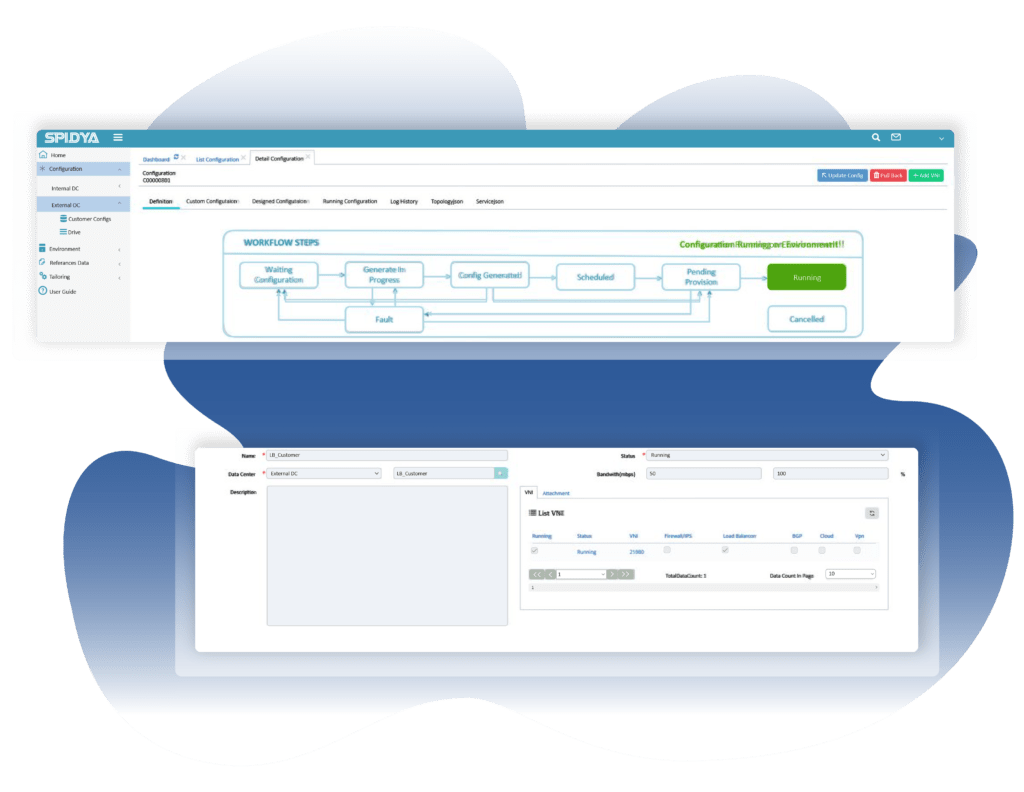
Manage your data center on a single platform. Monitor hardware, networking, storage, and configurations while reducing manual tasks and improving efficiency and security.
Centrally manage physical and virtual assets in the data center.
Manage, archive, and back up network and system configurations from a single location.
Reduce the manual workload by automating repetitive tasks.
Keep changes, access, and operations under centralized control.
Centrally manage physical and virtual assets in the data center.
Manage, archive, and back up network and system configurations from a single location.
Reduce the manual workload by automating repetitive tasks.
Keep changes, access, and operations under centralized control.
Data Center Manager provides operations teams with centralized visibility and control by enabling the management of hardware, network, software, and storage components in the data center through a single platform.
A Data Center Manager is a software solution that enables the centralized management of physical and virtual assets, network components, configurations, and operational processes within a data center.
Physical servers, virtual machines, network devices, switches, storage components, and various data center resources can be managed centrally.
Yes. Device and system configurations can be centrally managed, archived, backed up, and restored to previous configurations as needed.
Yes. User management, provisioning, deprovisioning, configuration, and defined operational steps can be executed using scripting and automation mechanisms.
Yes. The REST API can be configured to integrate with different systems and platforms through Northbound and Southbound integration interfaces.
Yes. Thanks to custom forms, user interfaces, scripting, and flexible integration capabilities, it can be customized to meet an organization’s operational needs.