What is an AI in ITSM Solution?
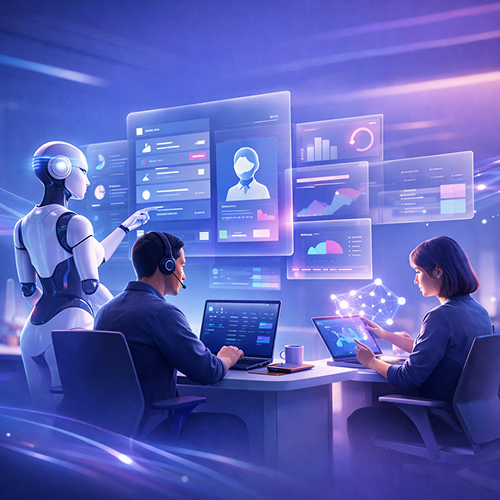
AI in ITSM solution is a modern approach that integrates machine learning, automation, and generative AI into IT service processes. It makes incident management, problem analysis, and user support proactive and personalized.
The primary goal of implementing AI in ITSM is to simultaneously improve operational efficiency and the overall customer experience. By leveraging these technologies, organizations can move beyond traditional reactive models to a smarter, more adaptive service infrastructure.
Why Choose an AI-Driven ITSM Solution?
In the age of digital transformation, traditional methods are no longer sufficient. Transitioning to a modern framework powered by AI in ITSM provides the following strategic advantages:
Preventive Intervention: Issues are detected before they occur (shifting from a reactive to a proactive approach).
Intelligent Support: Generative AI delivers personalized, instantaneous solutions to end-users.
High Efficiency: Routine tasks are automated, allowing IT teams to focus on high-value, strategic initiatives.
Maximum Speed: Waiting times in ticketing and resolution processes are minimized to near-zero.
The Role of ITSM in Digital Transformation
Businesses now view IT departments as strategic partners rather than mere technical support. This shift has redefined the ITSM operations framework. Today, a successful strategy must go beyond infrastructure maintenance; it must directly drive business goals and create a competitive advantage.
By leveraging AI in ITSM, organizations transform technical service into a strategic engine for digital growth.
Changing Expectations and the Modern ITSM Solution
Today’s users expect the same speed and personalization from corporate IT that they receive from consumer giants like Amazon, Netflix, and Apple. To meet these rising standards, an effective ITSM solution must deliver:
Instant Response: Rapid resolution as a baseline.
Hyper-Personalization: Tailored experiences for every department and user.
Proactive Management: Identifying and resolving issues before they impact the user.
Advanced Self-Service: Empowering users to solve routine tasks independently.
Full Transparency: Clear visibility into IT processes and ticket statuses.
The Limitations of Traditional IT Support Models
The classic “break-fix” (reactive) mindset can no longer keep pace with the speed of modern business. The primary constraints of traditional systems include:
High Downtime Costs: Waiting for an issue to occur before intervening disrupts business continuity. With average downtime costs reaching $5,600 per minute, reactive models create significant budgetary strain.
Lack of Flexibility: A “one-size-fits-all” service package fails to meet the unique demands of different departments, such as Marketing or Finance.
Knowledge Silos and Redundancy: When solutions remain hidden in individual minds or scattered files, the same problems are solved repeatedly, leading to major time loss.
AI and Personalization Strategies in ITSM Solutions
An AI-powered ITSM solution is revolutionizing IT service management. Beyond merely increasing operational efficiency, these technologies enable the creation of entirely new service models and customer experiences.
By integrating AI in ITSM, organizations can shift from standardized processes to intelligent, user-centric strategies that adapt to individual needs in real-time.
What is Hyper-Personalization and Why Does It Matter?
Hyper-personalization goes beyond basic segmentation to create unique experiences for every user. By leveraging AI in ITSM, organizations can deliver tailored support through:
Behavioral Analysis: AI analyzes past tickets and usage habits to offer bespoke solutions. For instance, a designer’s Adobe Suite issue and an accountant’s ERP error are handled with distinct, role-specific logic.
Contextual Support: The system understands the user’s active application and history to provide proactive suggestions at the exact moment of need.
Dynamic Knowledge Bases: Instead of static FAQs, an AI in ITSM framework delivers content adjusted to the user’s technical expertise and department, ensuring the right level of detail every time.
Building Trust-Based Customer Relationships
Trust is the foundation of successful IT partnerships. Modern ITSM solutions strengthen this bond through reliability and transparency:
Transparency & Visibility: Real-time dashboards and automated reporting allow clients to monitor infrastructure health and project progress continuously.
Consistent Service Quality: By minimizing human error, AI driven ITSM ensures high-quality, standardized service 24/7.
Proactive Communication: AI detects potential issues before clients even notice, proving that the IT provider is actively safeguarding their interests.
Data Consistency (NAR): Tools like the Network Access Registry (NAR) normalize diverse data (IP, MAC, Hostname) into a unified schema, ensuring total data integrity across CMDB and network tools.
From Reactive Support to a Proactive ITSM Perspective
The most significant paradigm shift in modern IT Service Management is the transition from reactive support to proactive strategies. This transformation fundamentally redefines the value an ITSM solution delivers to businesses.
Predictive IT Management with AI
Machine learning algorithms analyze vast datasets to predict and resolve issues before they escalate. This predictive approach drastically enhances the effectiveness of an ITSM solution through:
Anomaly Detection: AI identifies real-time deviations—such as CPU spikes or memory leaks—signaling potential hardware failures or software bugs before they cause downtime.
Capacity Planning: By analyzing historical trends, AI forecasts future resource needs. This allows for proactive infrastructure scaling, which is vital for both performance and cost optimization in cloud environments.
Trend Analysis: AI in ITSM detects patterns in support tickets to identify systemic issues early. For example, a sudden rise in tickets following an update can pinpoint compatibility errors instantly.
Preventing System Downtime with Proactive Monitoring
Preventing downtime is vital for business continuity. Modern ITSM solutions minimize risks through multi-layered monitoring and automated response mechanisms:
Automated Health Checks: AI continuously monitors servers, databases, and applications. If critical parameters deviate, the system triggers instant alerts or pre-defined corrective actions.
Security Threat Prediction: AI-powered modules analyze network traffic and login attempts in real-time to detect anomalies, preventing security breaches before they escalate.
Automated Failover: When a critical component fails, the AI in ITSM framework automatically switches to backup systems, ensuring uninterrupted service for 24/7 operations.
The Role of Generative AI in ITSM Solutions
The integration of Generative AI into ITSM solutions is revolutionizing documentation and reporting, significantly improving both speed and content quality:
Tailored Performance Reports: AI generates stakeholder-specific reports—providing deep technical logs for IT teams while delivering high-level, business-oriented summaries for executives.
Automated Technical Documentation: System configurations, change logs, and troubleshooting guides are automatically created and kept up-to-date by Generative AI.
Smart Proposal Generation: By analyzing client needs, budget, and industry priorities, AI in ITSM can automatically draft professional service proposals with optimized service packages.
Success Tips for Maximizing Your ITSM Solution
To extract maximum value from your AI in ITSM strategy, focus on these critical success factors:
Continuous Improvement & Feedback: IT service management is an evolving journey, not a one-time project. Establish regular feedback loops via surveys and user interviews to gain actionable insights.
KPI Monitoring & Optimization: Consistently track key metrics such as resolution times, first-response rates, SLA compliance, and self-service adoption.
Industry Benchmarking: Compare your performance against global industry standards to identify areas for growth.
Technology Life-cycle Management: AI and automation evolve rapidly. Ensure your ITSM solution stays current by regularly evaluating and integrating new features.
Conclusion
In the era of digital transformation, an effective ITSM solution is a vital competitive advantage. By integrating AI, automation, and personalization, modern frameworks deliver value far beyond traditional reactive support.
Proactive strategies, hyper-personalization, and AI-driven automation are the cornerstones of future IT service management. Organizations that early adopt and effectively implement these technologies will secure a significant market advantage.