The role of technology for modern businesses is no longer merely “supportive”; it is a critical factor that directly determines growth, efficiency, and competitive advantage. At this point, the question “What are IT services?” is becoming a fundamental topic frequently discussed by both small and large-scale companies, especially as we approach 2026.
In this guide, we will address the question “What are IT services?” in the most comprehensive and up-to-date manner; we will examine its scope, components, why IT service management is critical in businesses, and the trends that will emerge in 2026.
What Are IT Services? Basic Definition and Scope
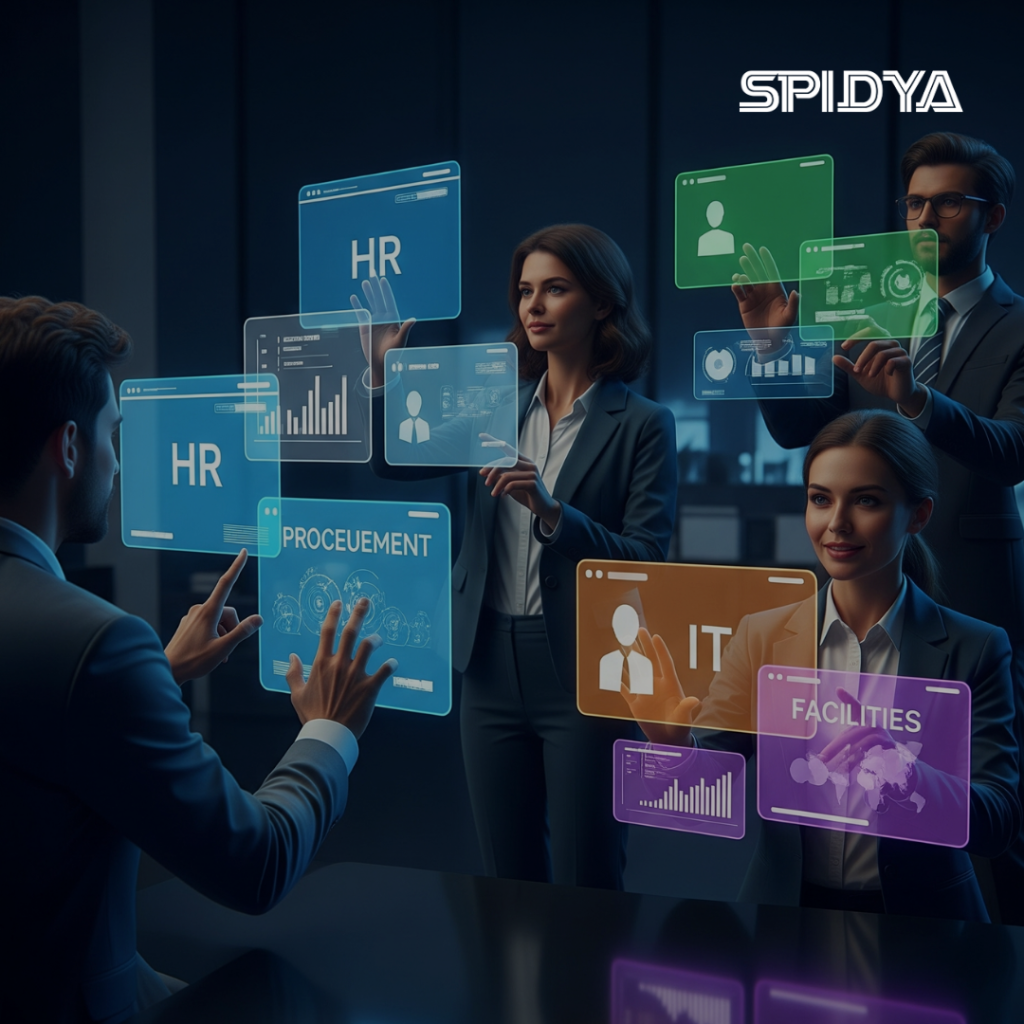
IT services (ITSM) encompass all services that involve planning, delivering, managing, and continuously improving technology to support a business’s daily operations, user experience, and digital transformation processes.
In short, it is the invisible but vital system that enables a business to access technology in a “continuously operational, secure, and efficient” manner.
General Scope of IT Services
IT services vary depending on the organization, but generally include the following:
- Network management and infrastructure support
- Hardware and software management
- Cybersecurity solutions
- Data backup & disaster recovery
- Cloud services (IaaS, PaaS, SaaS)
- Help desk / support services
- Application management
- Asset and inventory management
- IT service management (ITSM) processes
This list demonstrates that there is no single answer to the question “What are IT services?”; rather, it is a structure that continuously expands as business needs evolve.
What is IT Service Management (ITSM) and Why is it Important?
Although IT services often appear to be a technical field, their fundamental purpose is to meet business needs and deliver sustainable service quality. At this point, the structure that businesses require is IT service management (ITSM) approach itself; it enables services to be managed in a controlled manner from end to end.
ITSM is the framework established for planning services, standardizing operational processes, measuring user satisfaction, and providing uninterrupted service.
What Does ITSM Bring to Businesses?
- Faster service delivery
Process standardization and auditability - SLA and XLA compliance
- Reduced operational risks
- Cost optimization
Stronger cross-team collaboration - By 2026, ITSM will be more than just an operational necessity; it will also emerge as a strategic competitive advantage.
👉 Redefine your IT operations with SPIDYA IT Service Management (ITSM), an AI-powered modular platform compliant with ITIL standards!
7 Trends That Will Shape IT Services in 2026
Based on current trend analyses, the following topics will profoundly impact the IT services sector in 2026:
1. Artificial Intelligence-Powered ITSM (AIOps)
Thanks to AIOps:
- Incident processes will be automatically routed,
- Root cause analysis will be performed in seconds,
- Predictive maintenance will become widespread.
The question “What are IT services?” will mean “AI-powered and autonomous services” by 2026.
2. Agile and Low-Code Based Service Delivery
Low-code platforms for IT teams:
- Will create less IT dependency,
- Will digitize processes within days,
- Will provide flexibility in application development.
👉 The AI-powered Cheetah Low-Code Development Platform is not just a development tool; it is a powerful business partner that rapidly digitizes your business processes, increasing your efficiency and operational agility.
3. Cyber Resilience and Zero Trust Security
Cybersecurity is no longer just a defense mechanism; it is a fundamental part of business continuity strategy.
4. Hibrit Bulut Mimarisinin Yükselişi
Most businesses will adopt hybrid cloud as the “standard.”
This will make service management more complex but also more flexible for IT teams.
5. The Importance of the Digital Employee Experience (XLA)
ITSM is no longer solely focused on SLAs; it is evolving into a structure centered around employee experience (XLA – Experience Level Agreement).
6. Integrating Automation into Every Process
Automation, from inventory management to incident processes, will be the most critical transformation topic in all IT services in 2026.
7. Data-Driven IT Operations Management
Data analytics will play a central role in IT teams’ decision-making processes. This will further reinforce the “what gets measured gets managed” approach.
The Strategic Importance of IT Services for Businesses
Every business must now operate like a technology company.
Therefore, the answer to the question “What are IT services?” is based on the following strategic points:
- Ensuring uninterrupted operations
- Gaining competitiveness and speed
- Improving customer experience
- Secure data management
- Regulatory compliance
- Sustainability of digital transformation
In short, IT services enable businesses to gain resilience, efficiency, and scalability.
Conclusion – As We Enter 2026, IT Services Are No Longer Just a Support Unit
In this article, we addressed the question “What are IT services?” not only from a definitional perspective, but also from a strategic and trend-based viewpoint.
IT services heading toward 2026:
- More autonomous,
Smarter, - More user-focused,
- More secure,
- More agile
are evolving into this structure.
Therefore, it is critically important for businesses to evaluate IT services not just as a technical function, but as a business strategy that shapes the future.