






Monitor, Approve, Manage Service Demands with Request Management!
Provide a standardized and transparent structure for all kinds of service requests from your in-house users with the Request Management Module. In this way, put all request fulfillment processes into a clear flow and increase user satisfaction!


Provide a standardized and transparent structure for all kinds of service requests from your in-house users with the Request Management Module. In this way, put all request fulfillment processes into a clear flow and increase user satisfaction!
Benefits of the Request Management Module

The service catalog is a structured list of all standard IT services offered within the organization. It is accessible through a self-service portal and includes detailed descriptions, delivery times (SLAs), responsible teams, and approval workflows. Request management works in harmony with this catalog, ensuring all requests are handled in a consistent, predictable, and manageable way.

With standard workflows and ready-made templates, service requests are routed to the relevant departments without manual intervention and completed quickly. This approach not only reduces processing time, but also stabilizes request management processes.

Recurring requests – such as password resets or software installation – are met with automated workflows, minimizing the risk of human error. This ensures operational continuity and faster completion of request fulfillment processes with fewer resources.

Critical service requests such as access, hardware and software are executed systematically by linking them to specific approval mechanisms. This structure strengthens authorization controls while ensuring that service desk operations are secure and traceable.

Data such as request types, solution times and user satisfaction are analyzed with detailed reports, providing strategic insights to managers and teams.
The service catalog is a structured list of all standard IT services offered within the organization. It is accessible through a self-service portal and includes detailed descriptions, delivery times (SLAs), responsible teams, and approval workflows. Request management works in harmony with this catalog, ensuring all requests are handled in a consistent, predictable, and manageable way.
With standard workflows and ready-made templates, service requests are routed to the relevant departments without manual intervention and completed quickly. This approach not only reduces processing time, but also stabilizes request management processes.
Recurring requests – such as password resets or software installation – are met with automated workflows, minimizing the risk of human error. This ensures operational continuity and faster completion of request fulfillment processes with fewer resources.
Critical service requests such as access, hardware and software are executed systematically by linking them to specific approval mechanisms. This structure strengthens authorization controls while ensuring that service desk operations are secure and traceable.
Data such as request types, solution times and user satisfaction are analyzed with detailed reports, providing strategic insights to managers and teams.

Warning: Undefined array key "background_image" in /home/spidyac/public_html/wp-content/plugins/elementor/includes/conditions.php on line 87
Warning: Trying to access array offset on value of type null in /home/spidyac/public_html/wp-content/plugins/elementor/includes/conditions.php on line 90
Warning: Undefined array key "background_image" in /home/spidyac/public_html/wp-content/plugins/elementor/includes/conditions.php on line 87
Warning: Trying to access array offset on value of type null in /home/spidyac/public_html/wp-content/plugins/elementor/includes/conditions.php on line 90
Warning: Undefined array key "background_image" in /home/spidyac/public_html/wp-content/plugins/elementor/includes/conditions.php on line 87
Warning: Trying to access array offset on value of type null in /home/spidyac/public_html/wp-content/plugins/elementor/includes/conditions.php on line 90
Warning: Undefined array key "background_image" in /home/spidyac/public_html/wp-content/plugins/elementor/includes/conditions.php on line 87
Warning: Trying to access array offset on value of type null in /home/spidyac/public_html/wp-content/plugins/elementor/includes/conditions.php on line 90
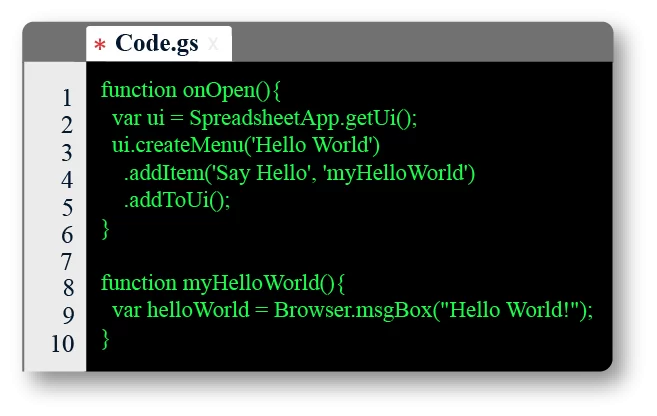
Frequent service requests such as password reset, email setup, software installation are completed automatically with AI support according to predefined flows.
Predefined flows ensure consistent and fast processing of request management processes; users ' requests are clearly routed and the burden on the IT team is reduced.

Warning: Undefined array key "background_image" in /home/spidyac/public_html/wp-content/plugins/elementor/includes/conditions.php on line 87
Warning: Trying to access array offset on value of type null in /home/spidyac/public_html/wp-content/plugins/elementor/includes/conditions.php on line 90
Warning: Undefined array key "background_image" in /home/spidyac/public_html/wp-content/plugins/elementor/includes/conditions.php on line 87
Warning: Trying to access array offset on value of type null in /home/spidyac/public_html/wp-content/plugins/elementor/includes/conditions.php on line 90
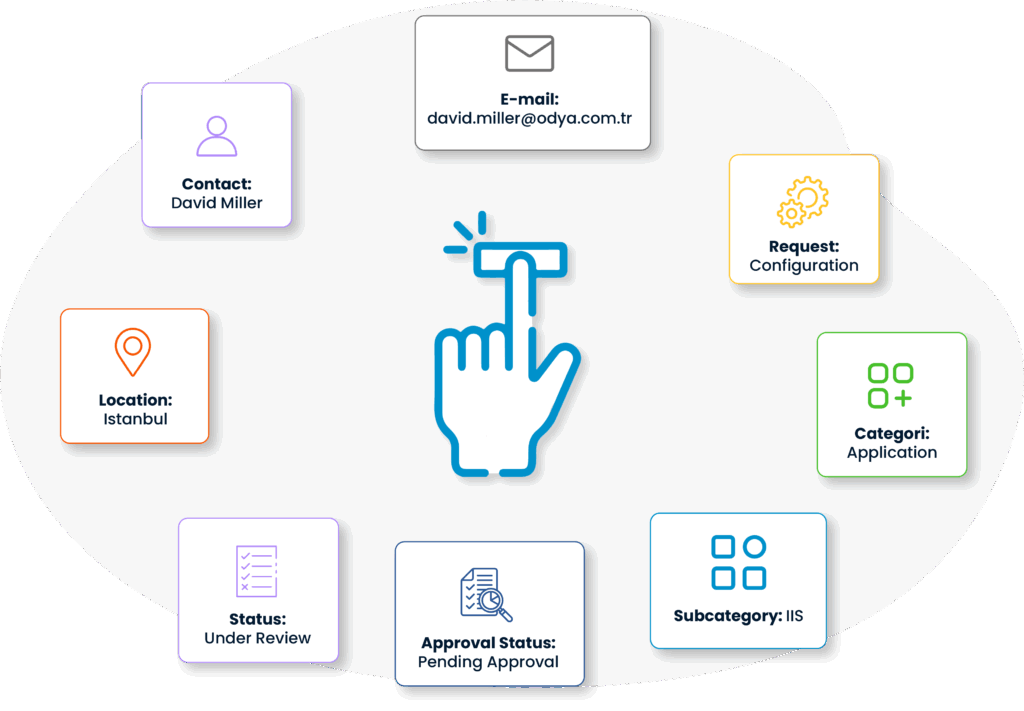
Request creation processes can be initiated not only through the portal, but also through other channels such as email, chat applications or system monitoring tools. (Zabbix, PRTG, Prometheus SolarWinds, Manage Engine, SAP) In this way, requests are collected in a centralized structure and managed in integration with other ITSM processes such as change management.

Warning: Undefined array key "background_image" in /home/spidyac/public_html/wp-content/plugins/elementor/includes/conditions.php on line 87
Warning: Trying to access array offset on value of type null in /home/spidyac/public_html/wp-content/plugins/elementor/includes/conditions.php on line 90
Warning: Undefined array key "background_image" in /home/spidyac/public_html/wp-content/plugins/elementor/includes/conditions.php on line 87
Warning: Trying to access array offset on value of type null in /home/spidyac/public_html/wp-content/plugins/elementor/includes/conditions.php on line 90
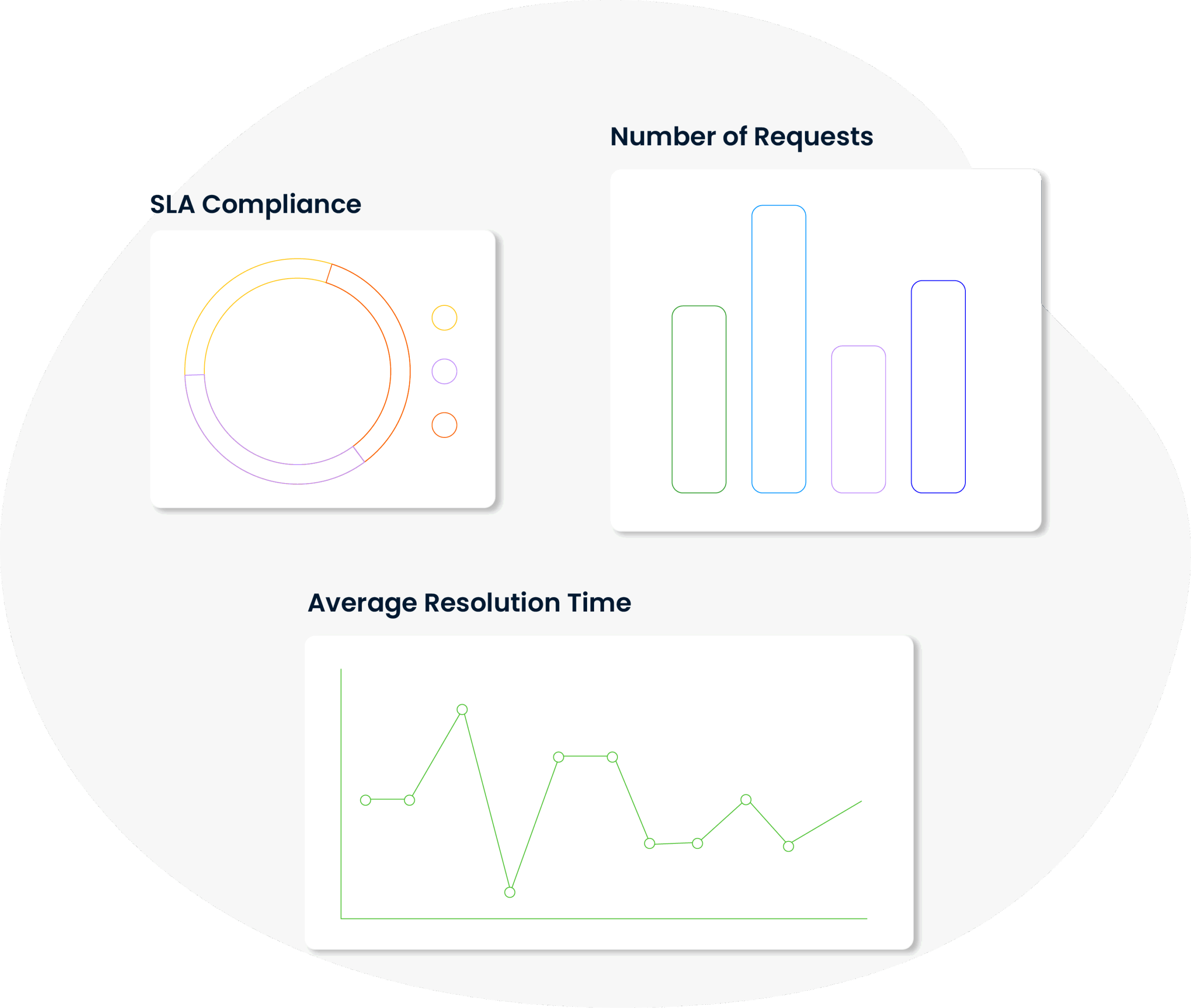
All service requests are tracked instantly through comprehensive monitoring panels. Metrics such as number of requests, average resolution times, and SLA compliance allow managers to analyze operational performance.

Warning: Undefined array key "background_image" in /home/spidyac/public_html/wp-content/plugins/elementor/includes/conditions.php on line 87
Warning: Trying to access array offset on value of type null in /home/spidyac/public_html/wp-content/plugins/elementor/includes/conditions.php on line 90
Warning: Undefined array key "background_image" in /home/spidyac/public_html/wp-content/plugins/elementor/includes/conditions.php on line 87
Warning: Trying to access array offset on value of type null in /home/spidyac/public_html/wp-content/plugins/elementor/includes/conditions.php on line 90
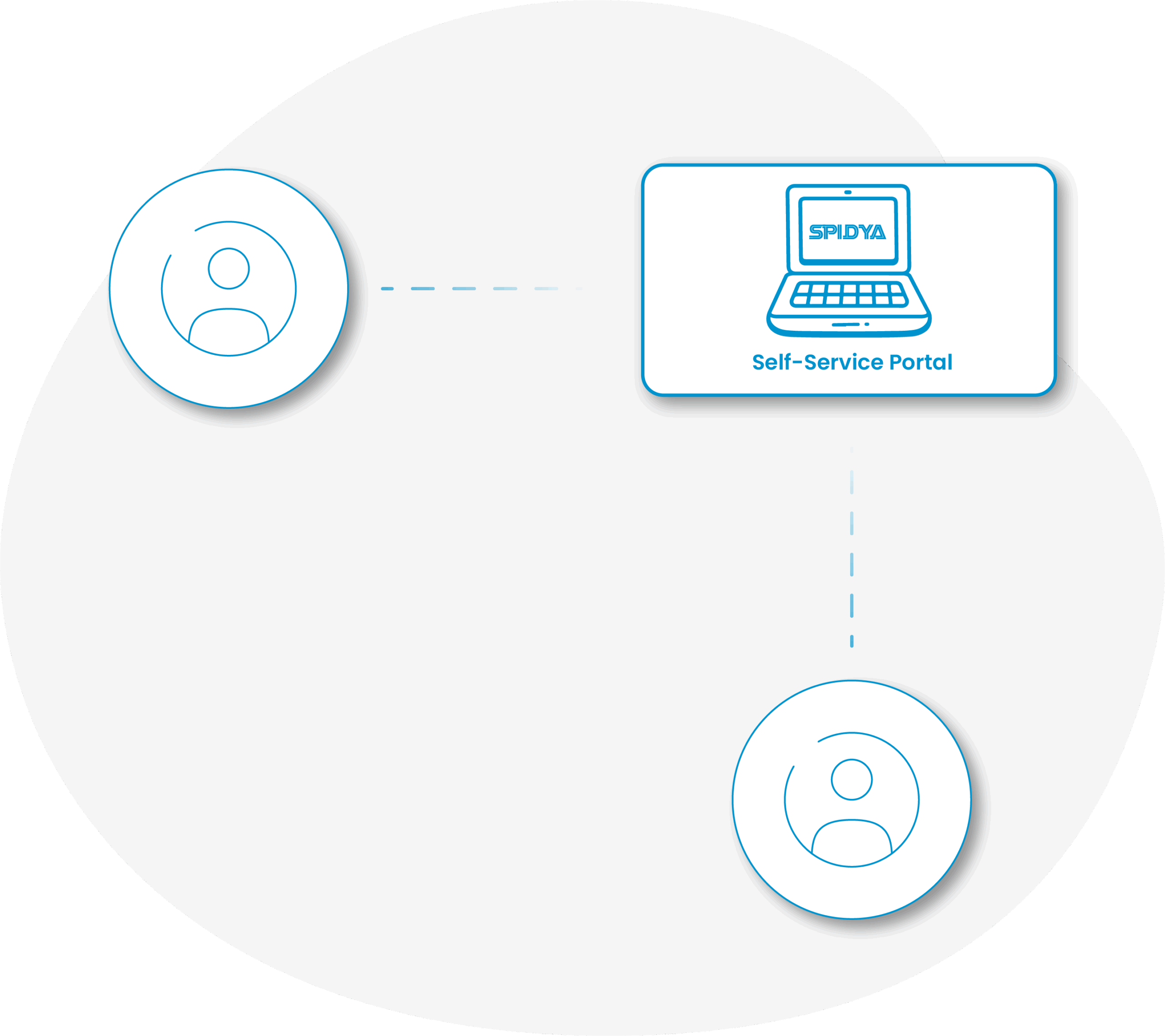
Users can initiate the service request transactions they need directly through the self-service portal and view every step of the process instantly. This approach not only increases user satisfaction, but also reduces the workload, allowing the IT team to focus on more strategic tasks.

The service catalog is a structured list of all standard IT services offered within the organization. It is accessible through a self-service portal and includes detailed descriptions, delivery times (SLAs), responsible teams, and approval workflows. Request management works in harmony with this catalog, ensuring all requests are handled in a consistent, predictable, and manageable way.

With standard workflows and ready-made templates, service requests are routed to the relevant departments without manual intervention and completed quickly. This approach not only reduces processing time, but also stabilizes request management processes.

Recurring requests – such as password resets or software installation – are met with automated workflows, minimizing the risk of human error. This ensures operational continuity and faster completion of request fulfillment processes with fewer resources.

Critical service requests such as access, hardware and software are executed systematically by linking them to specific approval mechanisms. This structure strengthens authorization controls while ensuring that service desk operations are secure and traceable.

Data such as request types, solution times and user satisfaction are analyzed with detailed reports, providing strategic insights to managers and teams.
Features of the Request Management Module

Standard Request Categories
Integration Support

Self Service User Experience


Frequently Asked Questions (FAQ)
Yes. You can define single or multi-stage approval flows according to the type of request. These flows can be customized on a person, department or role basis and allow the request fulfillment process to proceed in a more controlled manner.
Absolutely. Frequent service requests such as password resets and email address creation are managed with automated workflows. This both speeds up request management processes and increases operational efficiency
Yes. Users can instantly view the status of their requests through the self-service portal and are regularly informed about the process with notifications. This structure is fully compatible with the modern IT service desk approach.
Yes. The demand management module presents metrics such as demand volume, average resolution time and satisfaction scores in detailed dashboards. Thanks to this data, insights into both performance monitoring and incident management processes can be generated.
Yes. All access and system requests are evaluated through structured approval mechanisms. This system ensures a process that complies with security policies and also minimizes incident process risks.
If You Have Any Other Questions, Contact Us!
Yes. You can define single or multi-stage approval flows according to the type of request. These flows can be customized on a person, department or role basis and allow the request fulfillment process to proceed in a more controlled manner.
Absolutely. Frequent service requests such as password resets and email address creation are managed with automated workflows. This both speeds up request management processes and increases operational efficiency
Yes. Users can instantly view the status of their requests through the self-service portal and are regularly informed about the process with notifications. This structure is fully compatible with the modern IT service desk approach.
Yes. The demand management module presents metrics such as demand volume, average resolution time and satisfaction scores in detailed dashboards. Thanks to this data, insights into both performance monitoring and incident management processes can be generated.
Yes. All access and system requests are evaluated through structured approval mechanisms. This system ensures a process that complies with security policies and also minimizes incident process risks.
